RevDog vs Intercom Fin: Website Sales Companion or Customer Agent?
Intercom Fin spans sales and service across channels. RevDog focuses on the website sales conversation, buyer insight, and incremental outcomes. Compare the operating models.
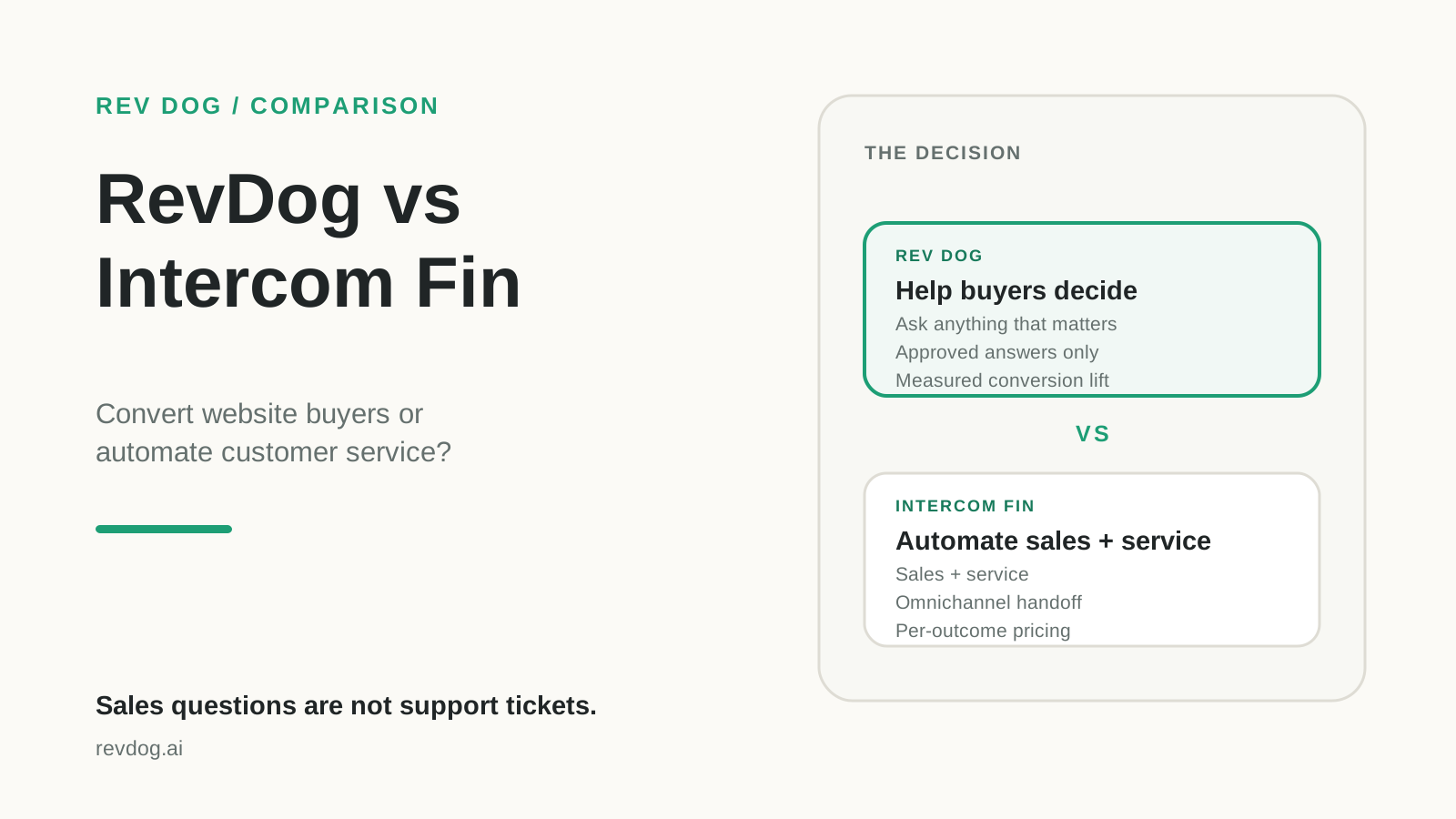
Intercom Fin is no longer only a support-resolution product. Fin's Customer Agent now supports sales, service, and ecommerce roles, including real-time website discovery, qualification, objections, routing, and cross-channel conversations.
That makes Fin a credible RevDog alternative, but not an identical one. Fin aims to become one customer agent across the lifecycle. RevDog focuses on the website sales conversation, buyer-question intelligence, inspectable conversations, and incremental lift.
RevDog vs Intercom Fin factual matrix
| Dimension | RevDog | Intercom Fin |
|---|---|---|
| Intended buyer | B2B teams wanting a governed website sales companion, buyer insight, and causal conversion measurement | Customer experience, support, sales, and ecommerce teams seeking one agent across roles |
| Traffic source | Any website traffic; page, journey, and conversation context, plus acquisition context when available | Website messenger, email, helpdesk, mobile and social channels across prospects and customers |
| Interaction model | Sitewide companion that answers, qualifies, handles objections, captures consented leads, and offers approved conversion actions | Customer Agent that can discover needs, answer, qualify, route, sell, resolve, and hand off across channels |
| Grounding | Approved sources with citations; unsupported material questions are withheld and logged | Knowledge base plus natural-language Playbooks, qualification criteria, routing rules, training, testing, and analysis |
| Measurement method | Persistent randomized holdout measuring qualified-conversion lift | Per-conversation outcomes and qualified leads plus Fin Analyze; pricing signals completion, not a randomized counterfactual |
| Pricing basis | Small base plus 20% of proven incremental lift, capped | Current public pricing starts at $0.99 per general Fin outcome; Intercom states Fin for Sales is $10 per qualified lead, with $1 resolutions/disqualifications |
| When RevDog is not right | You want a unified service-and-sales agent, existing helpdesk deployment, omnichannel support, ticketing, or lifecycle memory | Fin covers that broader customer-agent role |
Fin's expanded sales role
Fin for Sales can proactively engage based on page and browsing context, answer pricing and feature questions, address objections, recommend plans or offers, qualify against customer-defined criteria, route buyers, and continue through messenger or email.
Grounding comes from product knowledge and Playbooks that describe goals and behavior in natural language. Teams follow a Train, Test, Deploy, Analyze workflow. Because Fin also serves support, it can retain knowledge and context when a sales conversation turns into a service question.
RevDog's website sales loop
RevDog turns fixed sales pages into an interface where buyers can ask anything that matters to their decision. Rather than leaving a general-purpose LLM as the only place where buyers ask questions and form an opinion, your own grounded LLM answers from approved product and service knowledge and guides the buyer toward conversion.
RevDog uses the page, browsing journey, live conversation, and available acquisition context to resolve the buyer's next decision from approved sources. It can qualify, capture a consented lead, and offer a configured booking, trial, purchase, or other action. It does not attempt to replace the helpdesk or become the single agent for every customer stage.
Its learning loop is aimed at growth and revenue teams. Learnings ranks objections, topics, comparisons, qualification gaps, answer quality, actions, and outcomes across sessions. Conversations provides the per-session replay and audit trail. Its measurement loop uses treatment and control to estimate additional qualified conversions.
Both use outcome language, but the outcomes differ
Intercom deserves credit for transparent outcome pricing. Its sales-pricing explanation says customers define qualification and pay $10 when Fin delivers a qualified lead. A disqualification or support resolution is $1. Intercom deliberately chose the qualified lead rather than closed revenue because later sales performance is outside Fin's control.
RevDog defines an outcome differently. A qualified conversion is not billable merely because RevDog handled it. Billing uses the supported treatment-control gap. This asks whether the product caused more outcomes than would have occurred without it.
Neither model is inherently correct for every buyer. Fin's unit is simple and operational. RevDog's counterfactual model is more demanding and requires enough eligible traffic, a stable outcome, and time to reach confidence.
What customers report in practice
Fin's large review base reflects a product that can resolve substantial support volume and work inside an established customer-service operation. Reviewers value automation, broad knowledge access, and the ability to handle common questions without an agent. Recent G2 and TrustRadius reviews also report recurring friction:
- invented or inconsistent answers when content is missing, ambiguous, or large;
- repeated responses and escalation that happens later than the customer expects;
- explicit instructions or operational rules not always being followed;
- per-resolution costs becoming material as usage grows;
- complex multibrand setup, reporting separation, workflow configuration, installation, or customer-data cleanup.
A useful evaluation should include unknown questions, semantically similar phrasings, conflicting instructions, frustration and escalation tests, multibrand routing, and a cost model based on expected question volume rather than today's ticket count.
RevDog has far less independent customer evidence than Intercom. Its approved-source behavior, refusal and escalation paths, lead capture, booking actions, insights, and claimed incremental lift should all be verified in a controlled pilot.
Where each product fits
Fin fits teams that want one agent across support and sales, already operate Intercom or a supported helpdesk, need omnichannel deployment and human handoff, or value lifecycle memory more than campaign-specific experimentation.
Choose RevDog when acquisition spend is already substantial but conversion is weak, when you want growth without buying more traffic, or when you cannot see the questions and objections behind lost demand. It turns those buyer questions into a structured improvement queue and establishes incrementality before a variable fee is charged.
RevDog is not the right choice for a support-deflection program or a unified customer-service operation. Fin may not be the right choice when the requirement is a focused, governed website sales companion with a persistent holdout and an explicit buyer-learning loop.
Final verdict
The phrase “outcome pricing” means something different in each product. Fin charges for operational outcomes such as qualified leads. RevDog charges its variable fee against experimentally supported lift. Choose Fin for one service-and-sales agent across the customer lifecycle. Choose RevDog to turn the sales website into a grounded conversation and produce more conversion from existing demand.
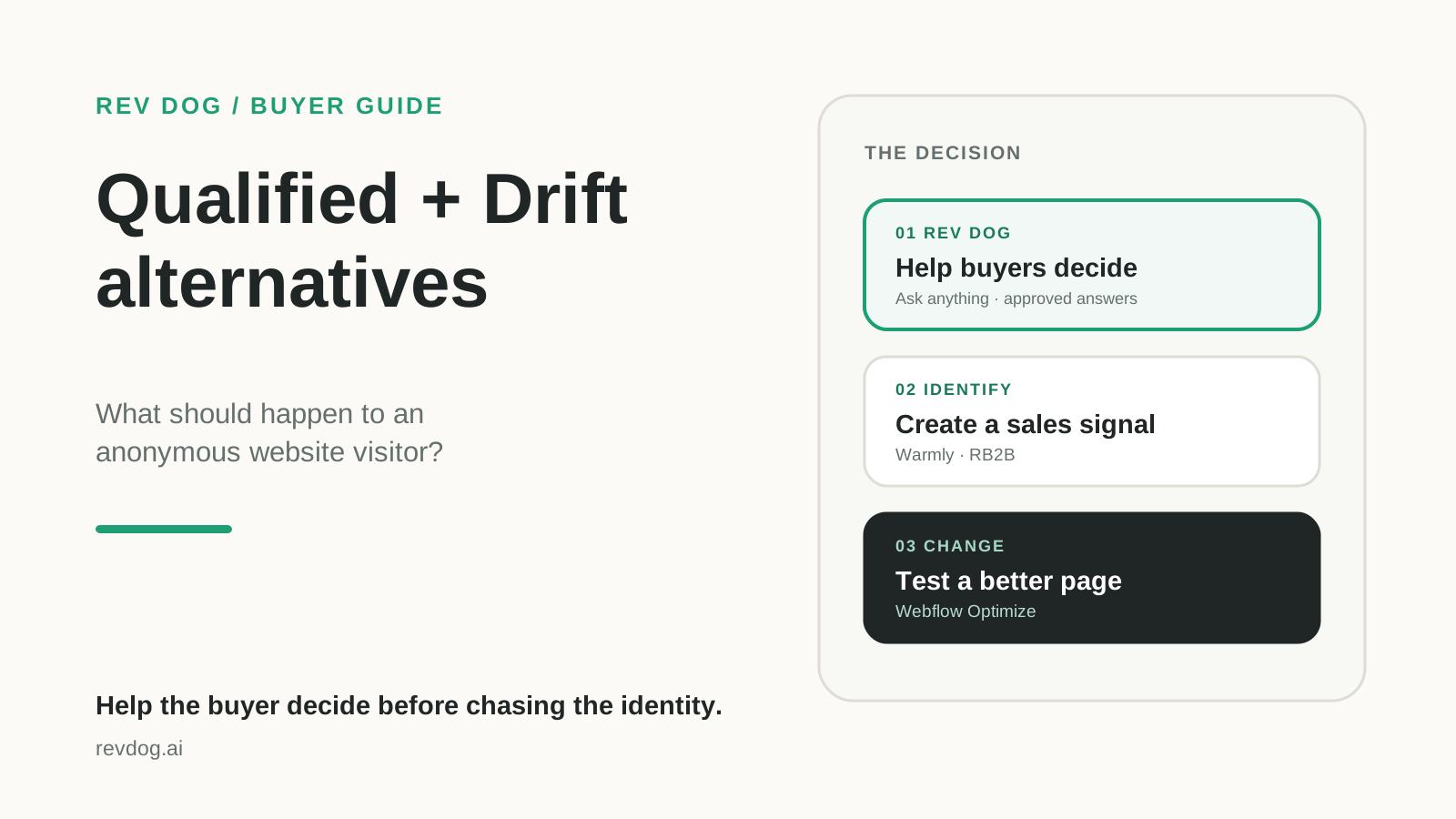
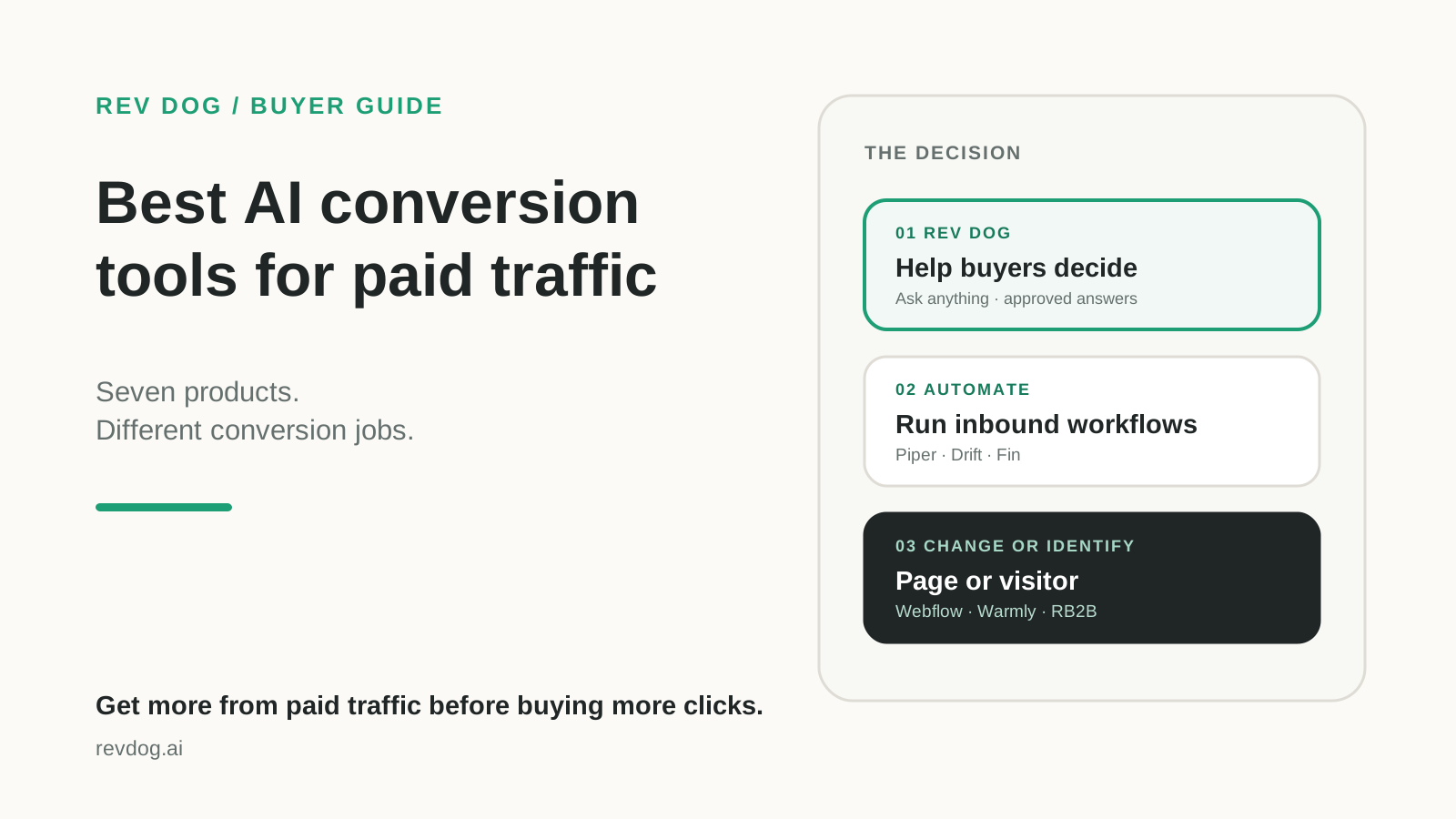
See best AI conversion tools for paid-traffic landing pages and best Qualified and Drift alternatives for the wider category.
Sources and review date
Fin facts were checked against official Intercom pages for Fin for Sales, sales pricing, product roles, and current pricing on August 17, 2026. Customer-review patterns were checked against G2 and TrustRadius on July 30, 2026. RevDog capabilities and positioning were reviewed against the current RevDog website and product implementation on August 19, 2026. Product capabilities and packaging can change; verify requirements with each vendor before purchasing.