Best Qualified and Drift Alternatives for Converting Anonymous Website Visitors
Anonymous visitor conversion can mean helping the buyer, identifying the account, or changing the page. Compare five focused Qualified and Drift alternatives by job, measurement, and price.
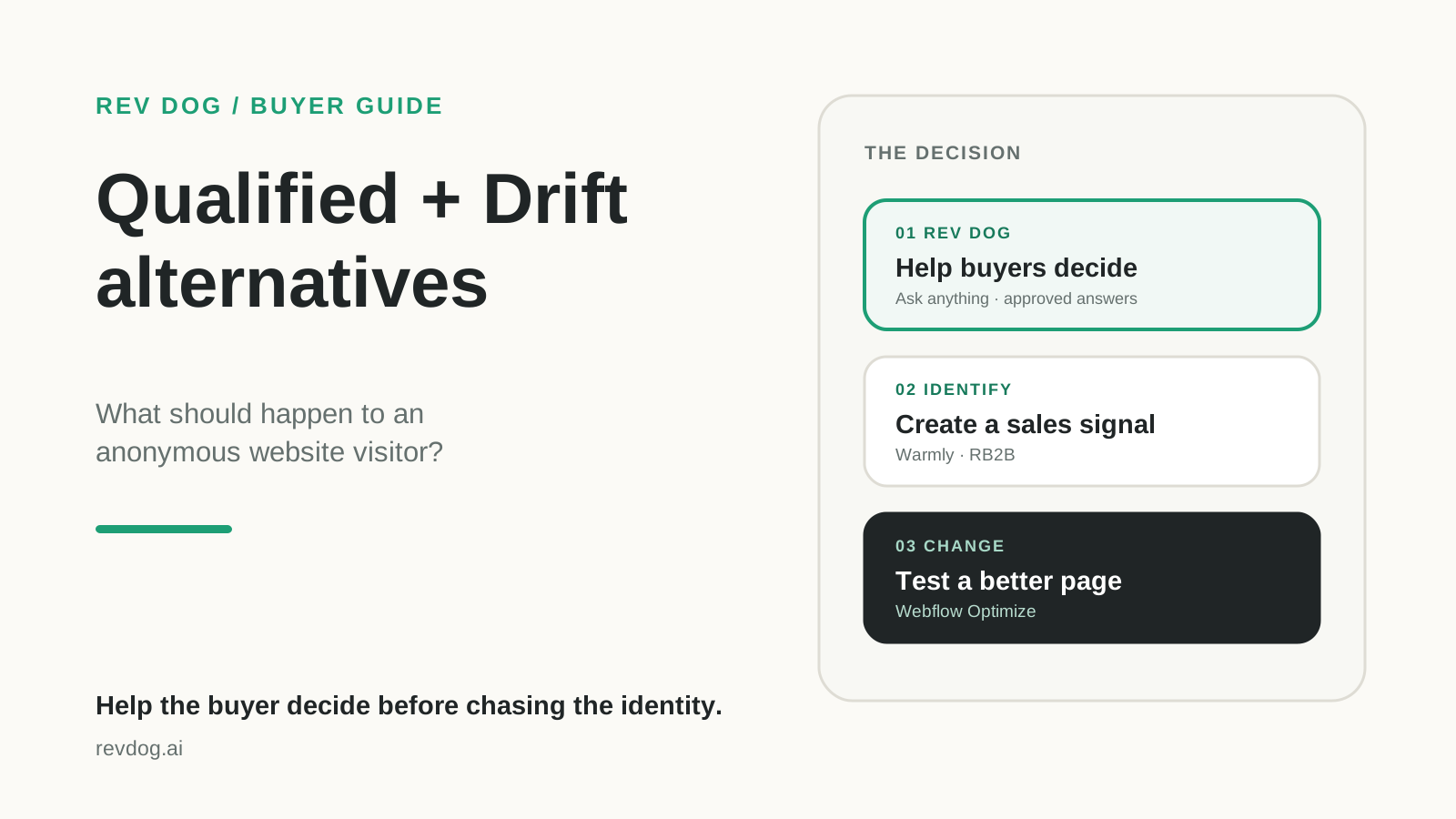
“Convert anonymous website visitors” can describe three different jobs:
- Help the person decide while they are still anonymous.
- Identify the person or company so sales can act.
- Change the page experience for the visitor segment.
Qualified and Drift cover broad conversational pipeline motions. The best alternative depends on which of those jobs you actually need, not which vendor has the longest AI feature list.
Factual alternatives matrix
| Alternative | Intended buyer | Traffic source | Interaction model | Grounding | Measurement method | Pricing basis | When RevDog is not right |
|---|---|---|---|---|---|---|---|
| RevDog | B2B teams wanting an on-site sales companion and buyer insight | Any anonymous or known website traffic; page and journey context plus ad context when available | Grounded conversation, qualification, consented lead capture, approved conversion actions, and buyer-learning loop | Approved cited sources; unsupported claims withheld | Persistent randomized holdout on qualified conversion | Small base + capped 20% of proven incremental lift | When identity, outbound, cross-channel SDR autonomy, support, live-chat operations, or page testing is the actual job |
| Warmly | Revenue teams prioritizing identifiable visitors | Person/company website matches, CRM and intent context | Identification, AI chat, personalization, routing, booking, alerts and retargeting | Product content plus CRM, behavioral and intent context | Conversion/pipeline reporting and some A/B tests | Starts at $30,000/year for plans with Inbound Agent | Identity-led orchestration and follow-up |
| Intercom Fin | Teams unifying sales and customer service | Anonymous and known conversations across website, email, helpdesk and social channels | Customer Agent for discovery, qualification, sales, resolution and handoff | Knowledge, Playbooks and customer-defined rules with Train/Test/Deploy/Analyze | General outcomes and qualified leads; not a randomized counterfactual | From $0.99/general outcome; sales role states $10/qualified lead | Helpdesk, omnichannel service-sales continuity, and lifecycle memory |
| Webflow Optimize | Web and CRO teams | Anonymous audiences targetable by UTM, behavior, device, geography and enterprise data | A/B testing, page variants, personalization and AI allocation | Not answer grounding; team/AI-created variants inside an experiment | Native page experiments and audience insights | From $299/month by page views; enterprise/non-Webflow custom | Improving the page without requiring a conversation |
| RB2B | Sales teams needing actionable identity | Website traffic eligible for U.S. person or global company matching | Passive identification and enrichment into sales tools | Not answer grounding; validated identity/professional data | Match coverage and downstream sales workflow outcomes | Free 150 credits; paid plans from $79/month | Names, emails, accounts, and outbound triggers |
This matrix is current to August 17, 2026. Capabilities and prices should be verified in a live proposal. The public pages reviewed do not document a persistent randomized visitor holdout for Warmly, Fin, or RB2B. Webflow Optimize documents controlled page experiments. Confirm any additional measurement requirements with each vendor.
What customer reviews reveal
Review evidence adds a useful reality check to vendor feature lists. Many of the limitations below appear inside positive reviews, so they are evaluation risks rather than claims that a product does not work:
- Qualified reviewers report AI-answer supervision, routing and scheduling edge cases, attribution gaps, and platform complexity.
- Drift reviewers report CRM constraints, incorrect routing, playbook maintenance, reporting gaps, and enterprise cost or implementation concerns.
- Warmly reviewers report variable identity accuracy, workflow reliability issues, filtering needs, and pricing friction.
- Intercom Fin reviewers report invented or inconsistent answers, repetition, late escalation, rule-following issues, and resolution costs at scale.
- RB2B reviewers report partial identification, noisy or incomplete profiles, manual filtering, and small-team economics.
- Webflow Optimize's former Intellimize listing is strongly positive but too small for broad conclusions: Capterra shows three reviews, with isolated variation-loading and editor-error concerns.
The practical lesson is to test the failure mode that matters to your operating model. Check answer governance for conversational agents, usable-match rate for identity products, routing fallbacks for pipeline platforms, and experiment setup and interpretation for page-optimization tools.
RevDog has a smaller independent evidence base than the established products in this guide. Its claims should be validated through a controlled pilot, with inspectable answers and conversations, explicit consent and conversion events, and enough eligible traffic to estimate lift.
RevDog: best when the anonymous buyer's question is the signal
RevDog turns fixed sales pages into an interface where buyers can ask anything that matters to their decision. Rather than leaving a general-purpose LLM as the only place where buyers ask questions and form an opinion, your own grounded LLM answers from approved product and service knowledge and guides the buyer toward conversion.
Choose RevDog when acquisition spend is high but conversion does not justify the cost, when growth needs to come from the current traffic budget, or when the team cannot explain why buyers leave. RevDog does not need to know a person's name to be relevant. The page, browsing journey, and live question reveal decision intent; ad, query, and campaign context add another layer when available. It answers from approved evidence, qualifies the visitor, captures contact details with consent, offers approved booking or conversion actions, records missing proof, and tests the experience against a control.
This makes RevDog a direct alternative when the outcome you need is more website conversion, better buyer understanding, and proof of incremental impact. Qualified and Drift remain relevant when the separate requirement is cross-channel SDR orchestration or a live-agent operation.
Read RevDog vs Qualified, RevDog vs Piper, and RevDog vs Drift.
Warmly: best when anonymous should become identified
Warmly attempts to resolve visitors, combine identity with CRM and behavioral context, and act through chat, routing, meetings, alerts, personalization, or retargeting. It is the closest alternative here to a broad identity-plus-conversation motion.
Its value will vary with geography, match rate, CRM readiness, routing design, and whether the team consistently acts on alerts. Read RevDog vs Warmly.
Intercom Fin: best when sales and service should share one agent
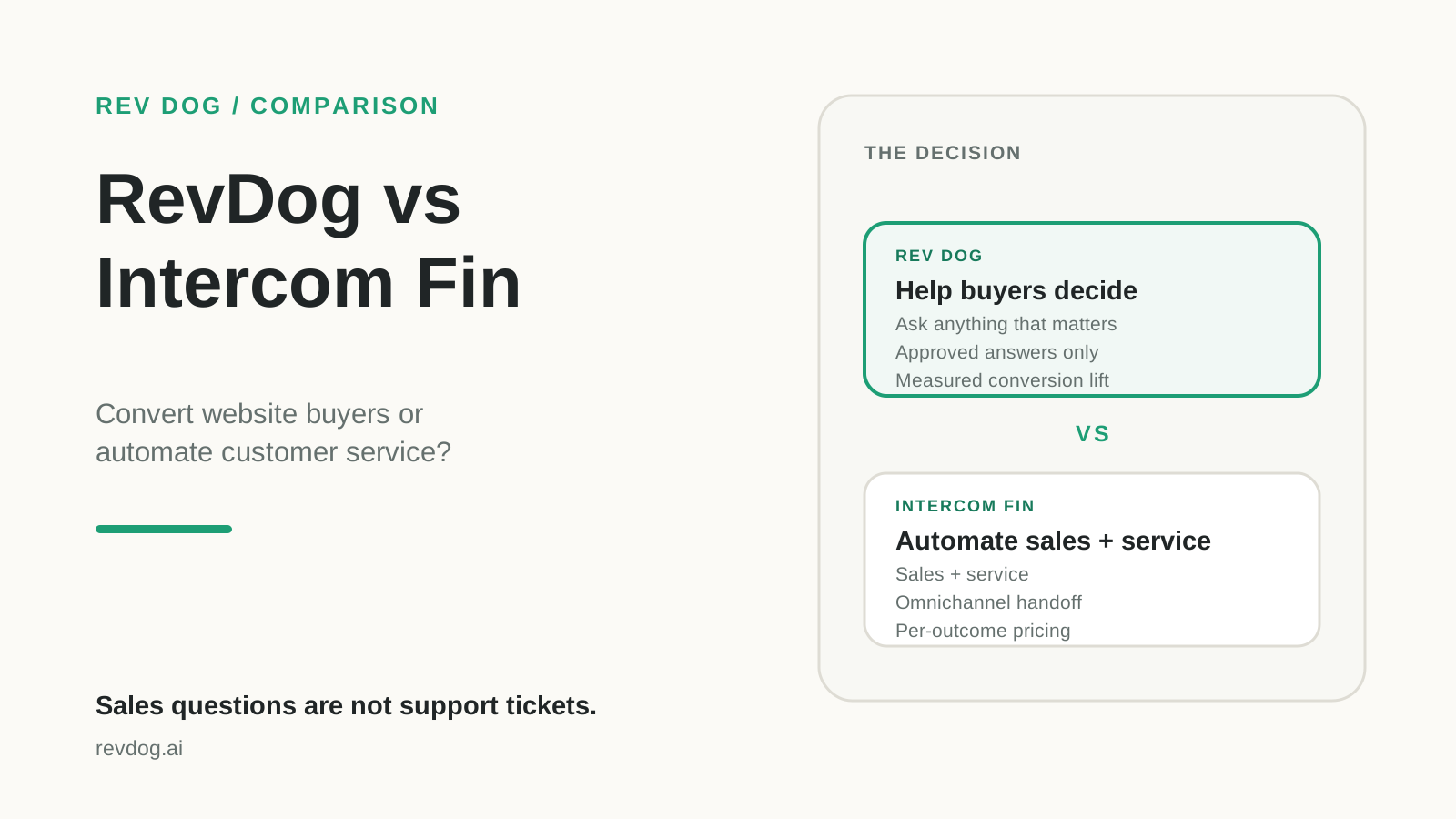
Fin can engage an anonymous prospect on the site, use knowledge and Playbooks to guide discovery, qualify the lead, route it, and continue through other customer roles. It is a strong alternative when Intercom or customer-service continuity is already strategic.
Its qualified-lead fee is an operational outcome, not proof that the lead would not have qualified otherwise. Read RevDog vs Intercom Fin.
Webflow Optimize: best when conversation is unnecessary
Sometimes the visitor is anonymous because identity is irrelevant. The page simply needs a better message, proof block, offer, or CTA for that audience.
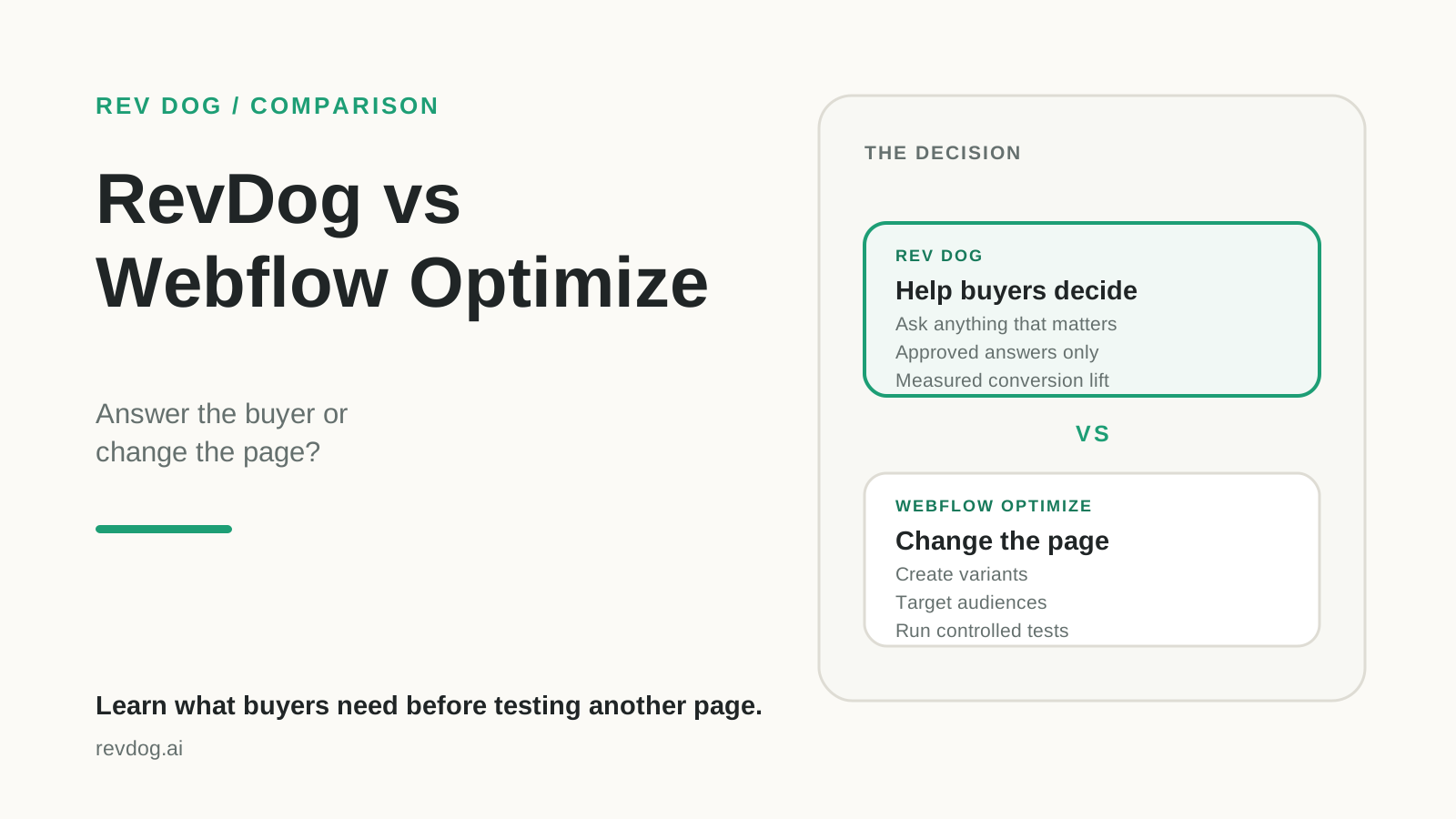
Webflow Optimize targets variants using UTM, behavioral, device, location, and enterprise firmographic data and measures them through experiments. It is the best alternative in this set when the team wants to improve the page without adding chat. Read RevDog vs Webflow Optimize.
RB2B: best when a sales signal is enough
RB2B does not try to hold a buying conversation. It resolves a portion of traffic and sends person/company data and page context to the tools where sales works.
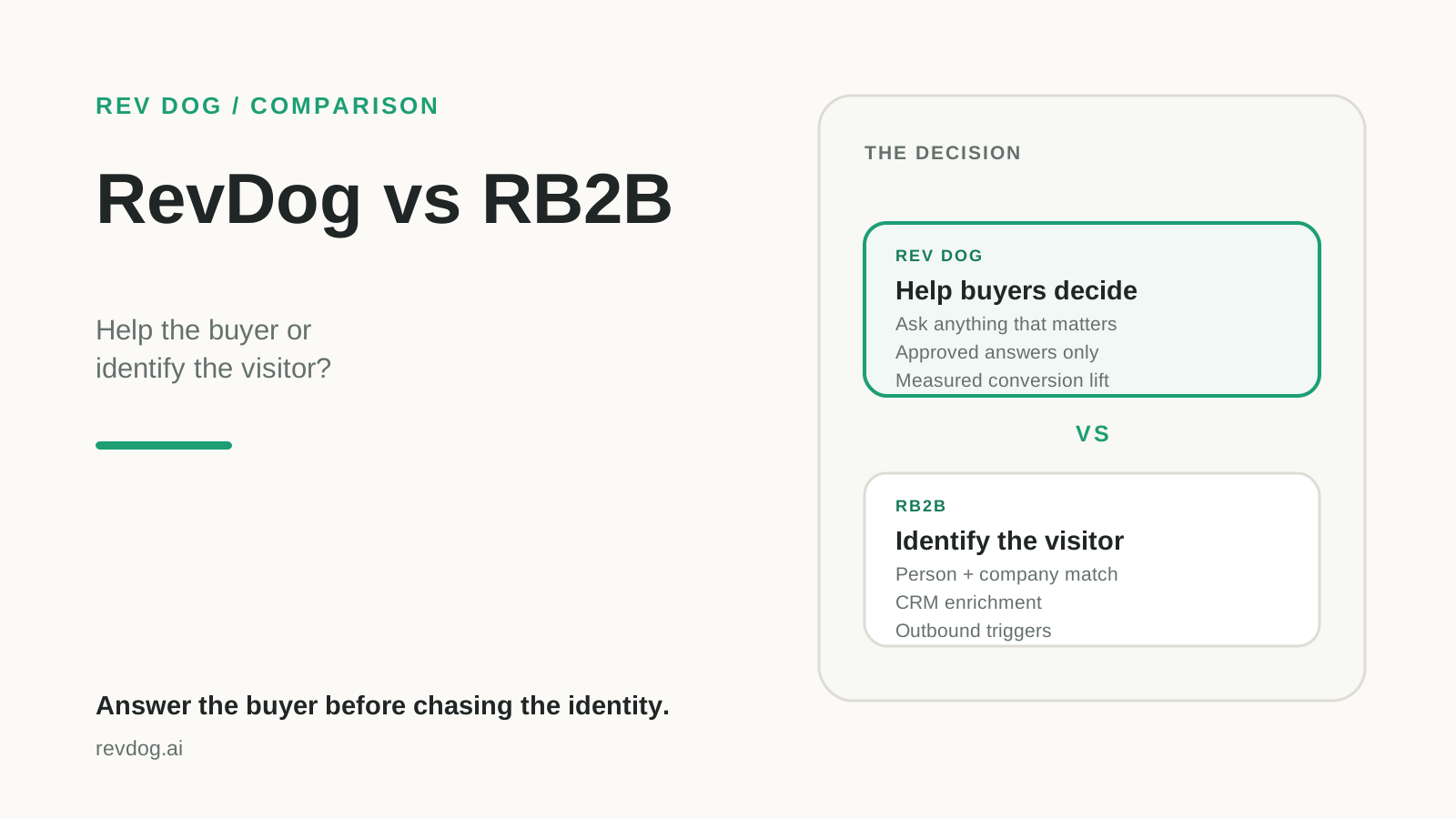
It is cheaper to start than the broader conversational platforms and can answer “who visited?” It does not answer the visitor's question or improve the live experience. Read RevDog vs RB2B.
Questions to ask every Qualified or Drift alternative
- Does relevance require a successful identity match?
- What does an unmatched anonymous visitor experience?
- Which sources can the agent use, and what happens when evidence is missing?
- Is the system conversing, changing the page, identifying the visitor, or doing all three?
- What exact event counts as success?
- Is reporting attribution, an operational outcome, an A/B test, or a persistent randomized holdout?
- What happens to repeat visitors across treatment, identity, and attribution?
- Is pricing based on seats, traffic, replies, identified profiles, qualified leads, or incremental lift?
- Which workflow will your team actually operate after the tool produces a signal?
Final recommendation
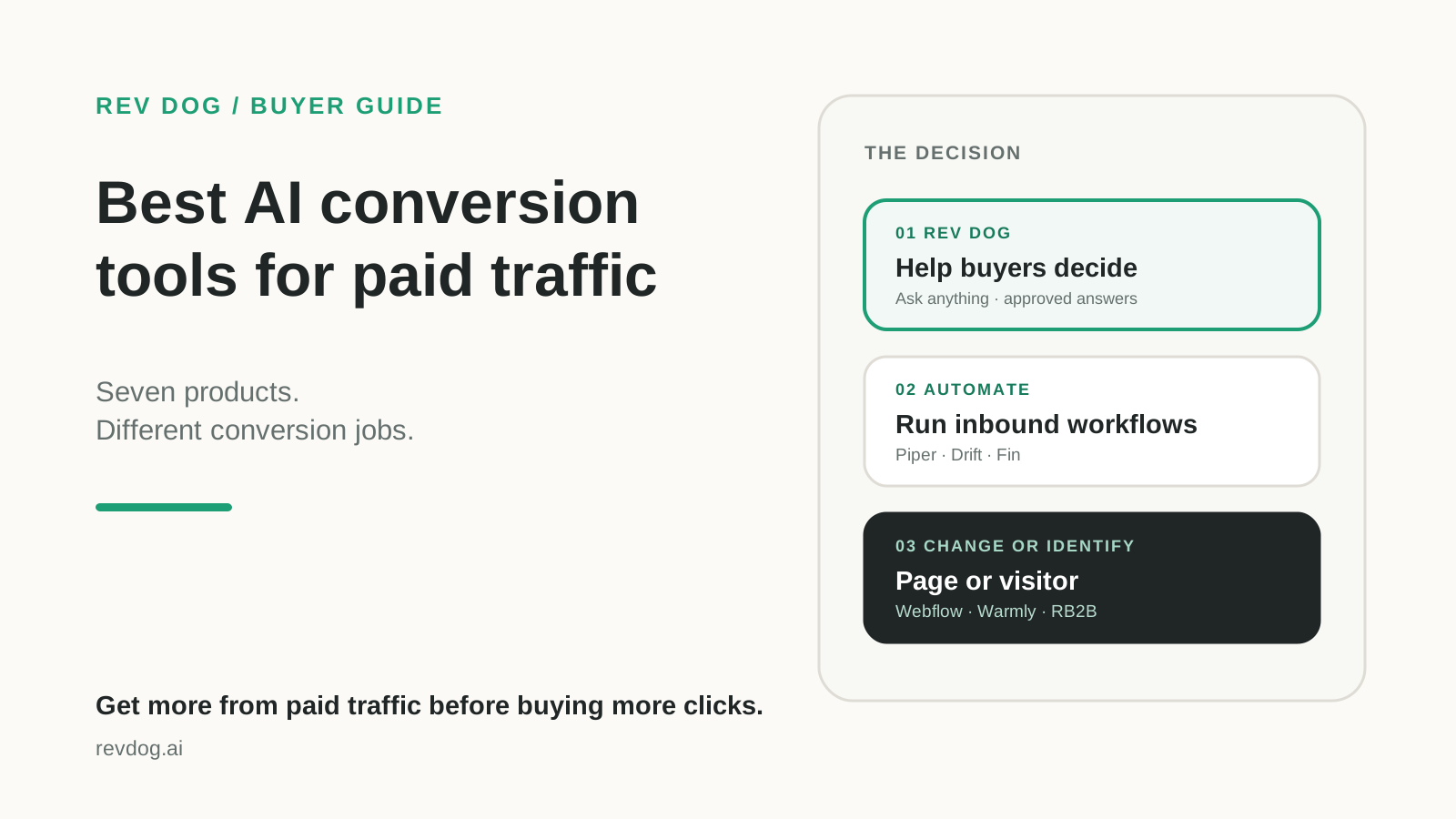
Match the product to the growth constraint. RevDog produces grounded website sales conversations, consented conversions, buyer insight, and incremental evidence. Warmly supplies identity-led inbound orchestration. Fin provides one customer agent across sales and service. Webflow Optimize runs page experiments. RB2B produces visitor identity and outbound signals.
Choose Qualified/Piper or Drift when the requirement is a full autonomous SDR or mature conversational-marketing operation. Choose RevDog when the website itself is the conversion constraint and the goal is to produce more qualified outcomes from demand you already have.
Sources and review date
This guide uses official product, pricing, and customer-review materials linked above and in the individual comparisons. Competitor product facts were reviewed August 17, 2026; review patterns were researched July 30, 2026, with Webflow Optimize's limited review sample checked August 19, 2026. RevDog capabilities and positioning were reviewed against the current RevDog website and product implementation on August 19, 2026. Product capabilities and packaging can change; verify critical requirements with each vendor.